

Supplies for This Watercolor Crab Tutorial
- Watercolor paper (140 lb / cold press recommended for layering washes)
- Round watercolor brushes (sizes 4–8 work well)
- Watercolor paint set (reds, oranges, purples, and neutrals)
- Pencil
- Eraser
- Ruler
- White gel pen or white watercolor for highlights
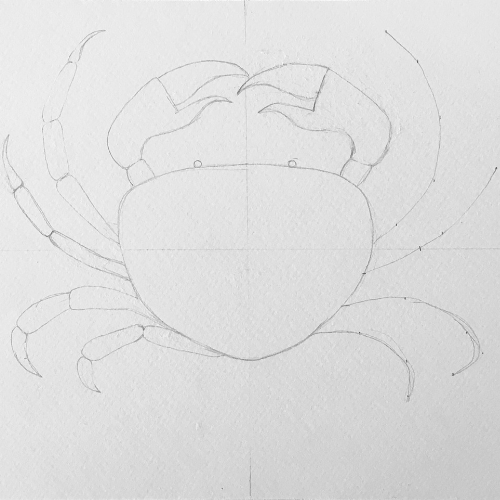
Step 1: Sketch the Basic Crab Shape
Start by measuring and lightly marking the exact center of your watercolor paper. Draw one vertical and one horizontal guideline that intersect in the middle of the page.
Using these guidelines, sketch the basic body shape of the crab, then add the claws. The cross lines help keep the crab symmetrical and evenly spaced, which makes the painting look balanced once color is added.Step 2: Sketch the Crab Legs (Left Side)
Begin drawing the crab legs on the left side only. First, draw a single flowing line to indicate the overall motion of each leg. Then, build the leg structure by adding small oval-like segments along the line.
To keep the drawing symmetrical:
- Measure the distance from key points on the left leg to the center line
- Mark those same distances on the right side with light dots
- You’ll connect these later for a mirrored effect
This measuring trick makes a huge difference, especially for beginner watercolor artists.
Step 3: Finish the Crab Sketch
Now repeat the leg shapes on the right side, using the dots as guides. Once all legs are complete, gently erase the center guidelines and lighten any remaining pencil marks so they don’t show through the paint.
At this stage, your crab sketch should feel clean, balanced, and ready for watercolor.

Step 4: Paint the Crab Body
Start with a light wash of red-orange watercolor over the entire crab body. While the paint is still wet:
- Add deeper red along the outline and lower edges
- Drop in brighter orange near the top center
- Use a purple-red tone near the bottom corners for depth and shadow
Blend the colors softly, and avoid using too much water—this keeps the colors saturated and vibrant. Let layers dry slightly between applications, and build color gradually until you’re happy with the richness.
Step 5: Paint the Crab Legs
Using the same color palette and technique, paint the legs:
- Base wash of orange
- Red along the edges
- Lighter orange in the center
- Purple tones for shadow and dimension
Keeping the color scheme consistent across the body and legs helps the crab feel cohesive and realistic.

Step 6: Add Details and Highlights
Once the painting is completely dry, deepen any pale areas with another light layer of paint. Then finish with:
- White highlights or dots in lighter areas
- Small black or dark spots in shadowed sections for texture
These final details bring the watercolor crab to life and give it a polished, finished look.

This watercolor crab is a relaxing, summer-friendly painting project that’s perfect for beginners and experienced artists alike. The simple shapes, warm coastal colors, and step-by-step approach make it an easy way to build confidence with watercolor techniques.

I love this!
ReplyDelete